
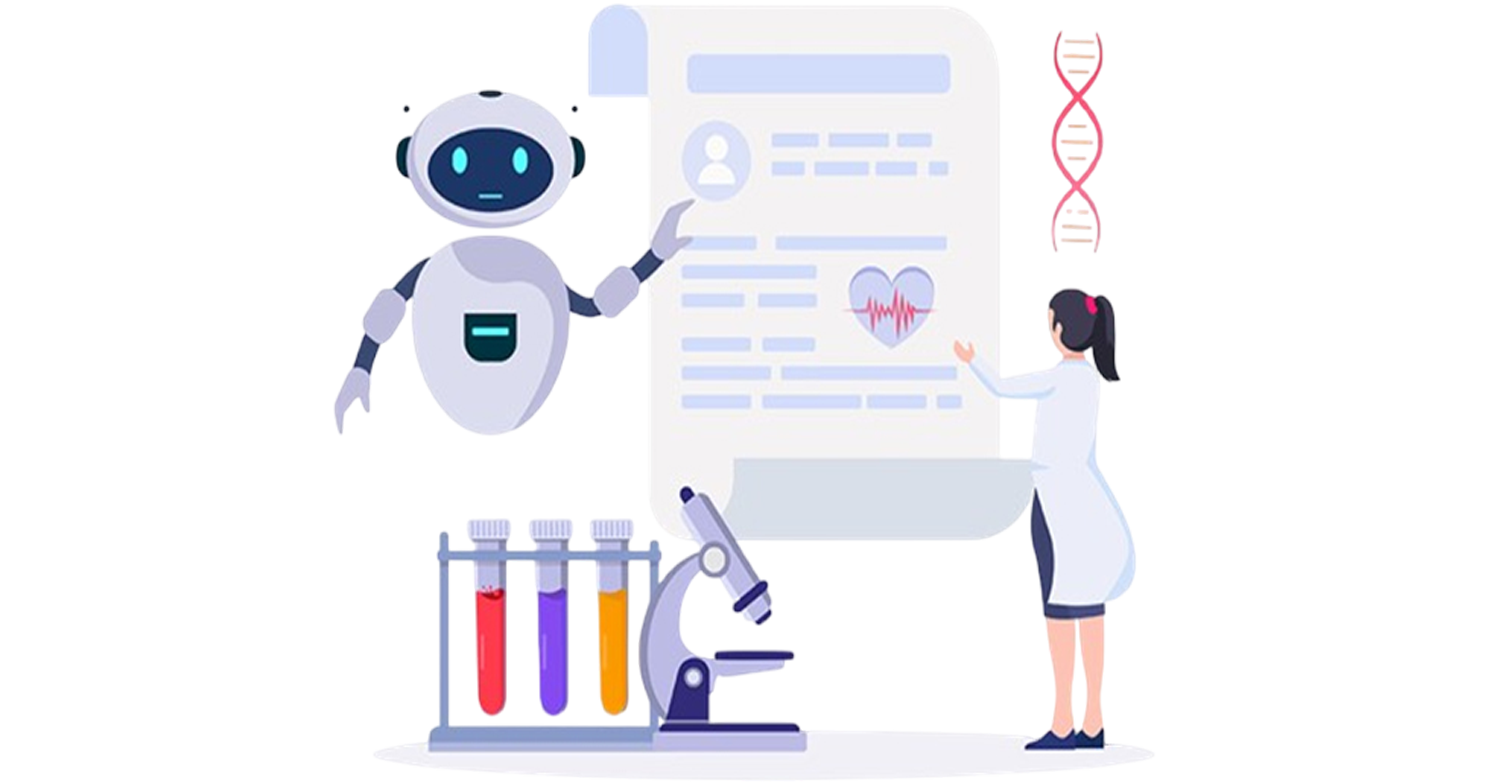
Traditional systems struggle with fragmented data-clinical records in one place, labs in another, billing elsewhere. This leads to delays, inefficiencies, and compromised care.
Agastha eliminates these disconnected systems through a unified, cloud-based platform that integrates:
- Electronic Health Records (EHR)
- Laboratory Information Systems (LIS)
- Practise Management Systems (PMS)
- Billing and revenue cycle workflows
This unified approach ensures that every piece of patient data is available in real time, improving both speed and accuracy of care delivery.
EHR Interoperability: Looking Beyond scheduling and data exchange
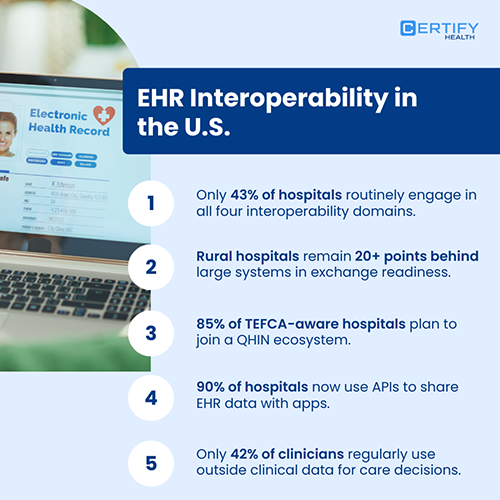
EHR interoperability is progressing beyond just a portal for scheduling and sharing data. It is becoming a smarter system where information is easy to understand, useful, and directly supports doctors in their daily work. Recent trends show that although around 70% of hospitals can share data, only about 42% of doctors actually use it when making decisions. This shows there is still a big gap between having access to data and actually using it effectively*1.
Transforming care across the continuum
Healthcare is rapidly evolving toward a future where care is continuous, connected, and patient-centric. At the heart of this transformation are Artificial Intelligence (AI) and EHR interoperability-working together to move beyond fragmented systems into an ecosystem where data is meaningfully used. The ultimate goal is no longer limited to digitization, but to enable better, faster, and more informed care across inpatient (IP), outpatient (OP), and emergency settings.
The struggle with traditional health systems is fragmented information and when critical information is not readily available at the point of care, clinicians are forced to make decisions with incomplete data. Clinical records are stored in one system, laboratory data in another, practise management systems operate independently, and billing workflows are often disconnected.
Hence, the future of healthcare lies in connected, intelligent systems that prioritize care above all else. Interoperability is no longer just a technical requirement-it is the foundation for delivering seamless, high-quality care across IP, OP, and emergency settings. And when platforms like Agastha continue to integrate AI and unified workflows, the industry moves closer to a reality where data, technology, and care work together as one cohesive system.
Key trends in Emergency care in Interoperability
- Real-time data access enables faster, informed decision-making in emergencies
- API-driven integration connects ER systems seamlessly with labs, pharmacies, and devices
- Cloud-based systems provide anytime, anywhere access to critical patient information
- AI and machine learning support predictive insights and faster triage decisions
- Connected medical devices deliver real-time vitals directly into clinical systems
- AI and machine learning support predictive insights and faster triage decisionsEnhanced security ensures safe and compliant data exchange during critical situations*2
This unified approach ensures that every piece of patient data is available in real time, improving both speed and accuracy of care delivery.
EHR Integration Across Inpatient and Outpatient Care
"A patient's journey is not just in the hospital. There is a "before" and an "after" (or a "not at all") and what we need to do is be able to stitch that together, making sure we are caring and understanding the context and then where we can leverage those digital tools to be there for them."
- Chief digital officer, large regional health system
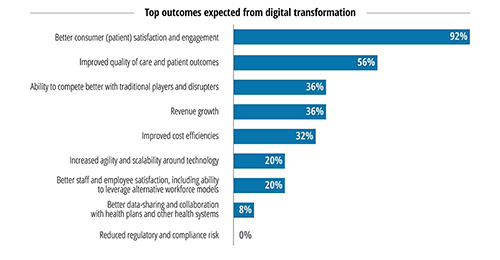
By 2030, Deloitte's research suggests EHRs are shifting from standalone systems to cloud-based platforms that host an ecosystem of apps and services. That transformation is expected to improve convenience and efficiency for both consumers and clinicians. Health systems should view cloud adoption not just as infrastructure but as a foundation for integrating IP and OP data, sharing real-time information across wards, clinics, and telehealth. When inpatient teams, outpatient clinics, and even home-care partners tap the same platform layer, transitions of care become smoother, and teams can act on the same up-to-date patient context.*3
For outpatient-inpatient care, integration means better continuity and patient engagement. Clinicians can access inpatient discharge summaries, medication changes, and diagnostic results instantly-reducing the risk of miscommunication and ensuring smoother recovery pathways. In inpatient settings, access to outpatient history helps providers make more accurate diagnoses and personalized treatment decisions, especially for chronic conditions*3.
Platforms like Agastha play a key role in enabling this integration by unifying EHR, labs, pharmacy, and billing into a single ecosystem. This ensures that whether a patient is in an emergency room, admitted for inpatient care, or visiting for a follow-up consultation, the same real-time data is available across all touchpoints.
As healthcare systems continue to adopt AI and interoperability at scale, the ability to connect every stage of care into one continuous experience will define the next generation of healthcare delivery.
- *1 Certify Health. (2025). EHR interoperability in 2026: Federal standards, challenges, and strategic roadmap. EHR Interoperability 2026: Federal Standards & Strategic Roadmap
- *2 Thomas, E. (2024, November 20). The future of healthcare interoperability: Trends that matter. 10decoders.https://10decoders.com/blog/the-future-of-healthcare-interoperability-trends-that-matter/
- *3 Deloitte. (2023). The future of electronic health records: How EHRs are evolving to support digital transformation in healthcare. Digital transformation in healthcare | Deloitte Insights